The work: a deck and a landing page
This semester I was asked to rebuild the International Office's presentation deck, and to help redesign the landing page for ICOP at cop.petra.ac.id. I said yes quickly, partly because I enjoy design and partly because I assumed it would be a break from the "real" work of partnerships. I was wrong about that, and being wrong taught me more than I expected.
The old deck had grown the way many institutional documents grow: a slide added for one delegation, kept for the next, never quite reconciled with the rest. Every slide was true, yet together they did not say anything. Opening it felt like walking into a room where everyone talks at once. The ICOP page had a gentler version of the same problem. The program behind it was strong, but the page was not yet speaking to the person who mattered most: someone abroad, reading in their second language, probably on a phone between meetings, deciding whether Petra was worth a reply.

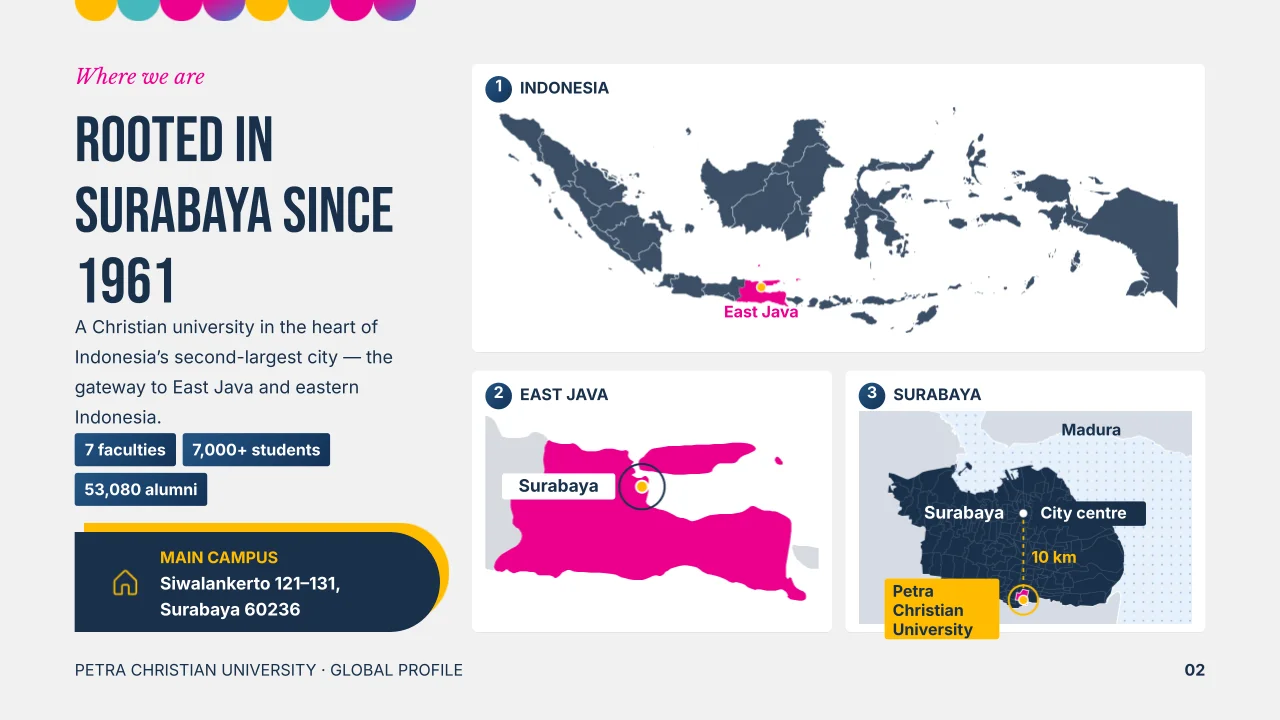
That image of the reader stayed with me through the whole project. It is easy to design for ourselves, for the people who already know Petra and fill in the gaps without noticing. It is much harder, and much more honest, to design for a stranger.
Gathering Petra into one story
Before I touched a single layout, the Director and I sat down with a question that sounds simple and is not: what do we actually want a partner to know about Petra? Not everything we could say, but the few things that would make someone on the other side of the world want to work with us.
Answering it meant going back through who we are, what we offer, how we collaborate, and what proof we have that it works. Almost none of the information was new. It lived in faculty documents, old reports, past presentations, and, most of all, in people's memories. What struck me was how much institutional knowledge exists only in conversation, and how fragile that makes an institution's ability to explain itself. Our work was less about writing content and more about curating it: deciding what mattered to a partner, letting go of what did not, and agreeing on one consistent voice.
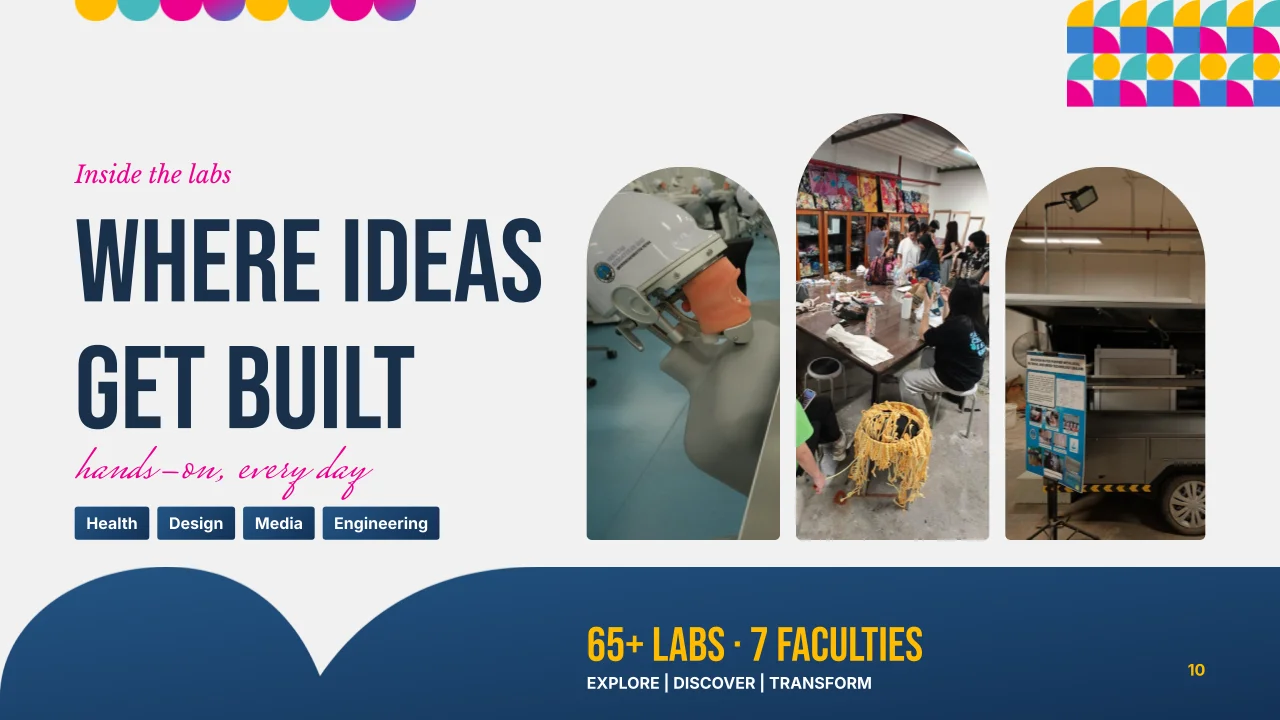
Those conversations were where I learned the most. Watching the Director weigh what to emphasize, and why, showed me how partnership work is really done: through judgment about what the other side needs to hear. By the time we reached the design stage, the hardest decisions had already been made. The design only made them visible.
Design as institutional diplomacy
I studied International Relations, and somewhere in this project the vocabulary of my degree came back to me. Diplomacy is not only what happens at the negotiating table. It is also the signals sent before anyone sits down: the tone of a letter, the care in a protocol, the impression a delegation leaves in the corridor. Universities practice their own quiet version of this, and I came to see a presentation deck and a landing page as exactly that kind of signal.
When a partner opens our deck, they are not just reading facts. They are reading whether we are organized, whether we respect their time, and whether we are the kind of institution that follows through. Clarity also becomes a courtesy. Most of our partners read English as a second language, as we do, so every unclear sentence or crowded slide is a small cost we ask them to pay. Removing that cost is a way of meeting them halfway.
The idea that helped me most was soft power, the ability to attract rather than compel. A university cannot force anyone to partner with it. It can only make itself understood and, ideally, wanted. Design is one of the few tools an international office has that works before the first meeting, at scale, and without us in the room. Seen that way, it is not decoration on top of internationalization. It is part of how internationalization begins.
Personal reflections
For years I kept my two working lives in separate boxes. By day I work in international partnerships; outside office hours I design and build websites. I sometimes wondered whether that made me unfocused, a person with two half-careers instead of one whole one. This project quietly answered that worry. Both lives ask the same question: who is on the other side, and what do they need in order to understand us? Partnerships answer it with conversations and agreements. Design answers it with structure, hierarchy, and restraint. I no longer think of them as two skills, but as one way of paying attention.
The hardest lesson was about letting go. Cutting slides that colleagues had worked on, or that once mattered in a particular visit, felt almost disrespectful. But I learned that saying less is often the most respectful thing we can do for the reader, and that an institution confident in itself does not need to say everything at once. I also learned to listen before designing. The best decisions in this project came from conversations, not from templates.
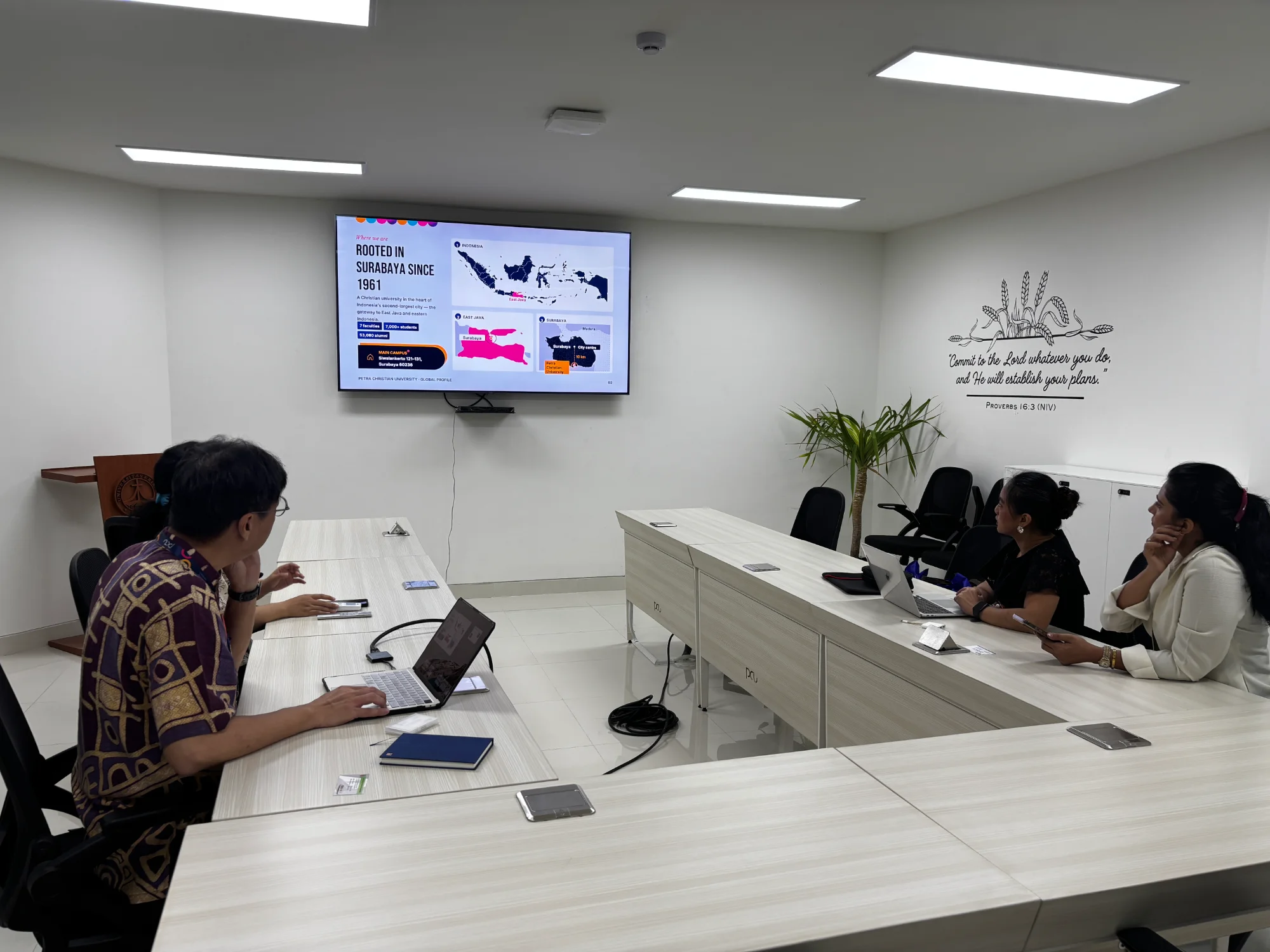
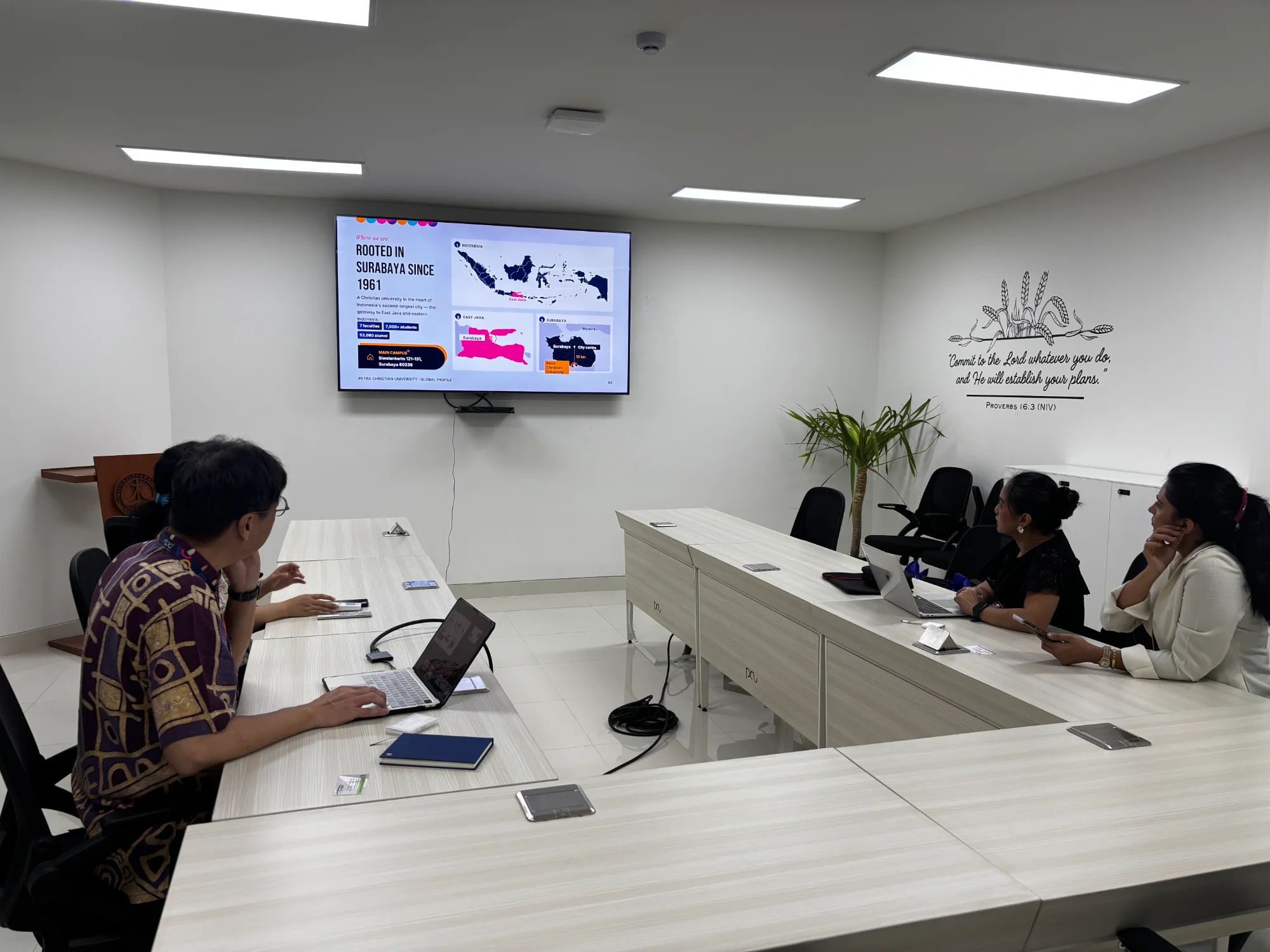
What made it all worthwhile was seeing the work leave my screen and enter the real thing: our meetings with partners. There is a particular kind of happiness in watching a slide I agonised over appear on the screen while the Director walks a visiting delegation through who Petra is. In those moments the deck stops being a file and becomes part of a conversation between two institutions. I am not the one speaking, and that is exactly the point. If the design works, no one notices it. They simply understand us a little faster, and the conversation can move on to what really matters: what we might build together.
I am grateful to have been trusted with something that speaks for the whole university. It changed how I see my own role. Representing Petra well is not only the work of leaders, ambassadors, and signing ceremonies. Sometimes it is the work of the person quietly asking, slide by slide, whether a stranger far away will understand who we are and want to know us better.
Editor: Zefanya Kharisma Nugroho